
On the things we are taught as girls, the things we unlearn as women, and what happens when it becomes our turn to raise a girl.
There are things we learn so early that, by adulthood, they have become part of who we are. They shape our instincts, our behaviour, our understanding of good manners and, eventually, our character. Some were taught gently. Others were corrected, reinforced or, for some of us, quite literally beaten into us. It is only when you begin pulling at those threads that you realise how much instruction goes into making a girl, and how difficult it can be to work out what you still believe, what you have outgrown and what you might never have chosen for yourself.
I was raised to say please and thank you, to respect my elders, to behave properly and to consider other people. I don’t resent that home training. To the contrary, I value it. Much of it has travelled quite comfortably into the way I raise my own daughter. What interests me now are the other lessons that accumulated alongside it, picked up from different people and across the different spaces I grew up in. The quieter messages about what made me pleasant, respectable, likeable or difficult. Nobody had to teach them as a curriculum. I learnt remarkably quickly which versions of me were easiest for the world to receive.
“Smile” is such a small instruction. Sometimes it is nothing more than that. Yet it belongs to a much bigger vocabulary girls become familiar with: be nice, be pleasant, don’t make things awkward, don’t make other people uncomfortable. I became good at reading rooms, at knowing when to speak and when something would be easier left unsaid, at adjusting the delivery of a truth according to how I thought it might land. There is skill in that, and sometimes kindness too. Somewhere along the way, I became so good at considering everybody else that I didn’t always notice when I had left myself out of the consideration altogether.
“We cannot teach girls compliance for years and expect resistance to arrive instinctively when they need it.”
I understand the vulnerability in that much better now. A girl who learns that being good means being agreeable doesn’t only become vulnerable to approval. She can become vulnerable to people. If you have spent years being praised for not making a fuss, respecting adults and considering other people’s feelings, saying no is not a switch you suddenly know how to flick on when it matters. Sometimes protecting yourself requires you to override the very instincts for which you have been praised. Sometimes you need to disappoint someone, offend them, walk away, make a scene. Sometimes saying no might save your life. I wish we told girls that more plainly, alongside all the perfectly good things we teach them about kindness and respect.
The rules become less obvious as you get older. Perhaps that is because, by then, nobody needs to keep repeating them. You have become perfectly capable of doing some of the policing yourself.
“Sit quietly like a lady” sounds almost old-fashioned now, but I don’t think the idea behind it has disappeared. It has simply learned new language. It appears in conversations about tone, attitude, respectability, anger, confidence and how much of any of those things a woman is permitted before somebody decides she is too much. I could reject those expectations confidently in one part of my life while remaining governed by them in another. I could speak my mind and then spend far too long wondering whether I had upset somebody. I could set a boundary and immediately start assembling its defence, as though my right to have one depended on whether I could make everybody else understand it.
For a long time, some part of me believed there was a bargain in all of this. I had followed the rules. I was decent. Modest. Respectful. Well behaved. I had done the things a good girl was supposed to do, and somewhere inside that education was the suggestion that goodness offered a kind of protection. It didn’t. Life did not hand out brownie points for good behaviour. I followed the rules and still got hurt. That made me angry. I never regretted being a decent person, but I had to learn that goodness is not armour.
I learned obedience before autonomy. But autonomy, for me, has never meant simply doing the opposite of what I was taught. If somebody tells you to sit quietly and you spend your life determined to stand and shout, they are still determining your posture. I can be quiet because I choose quiet. I can listen because somebody has something worth hearing. I can compromise because sometimes compromise is an expression of love rather than surrender. The freedom is in knowing that the decision belongs to me.
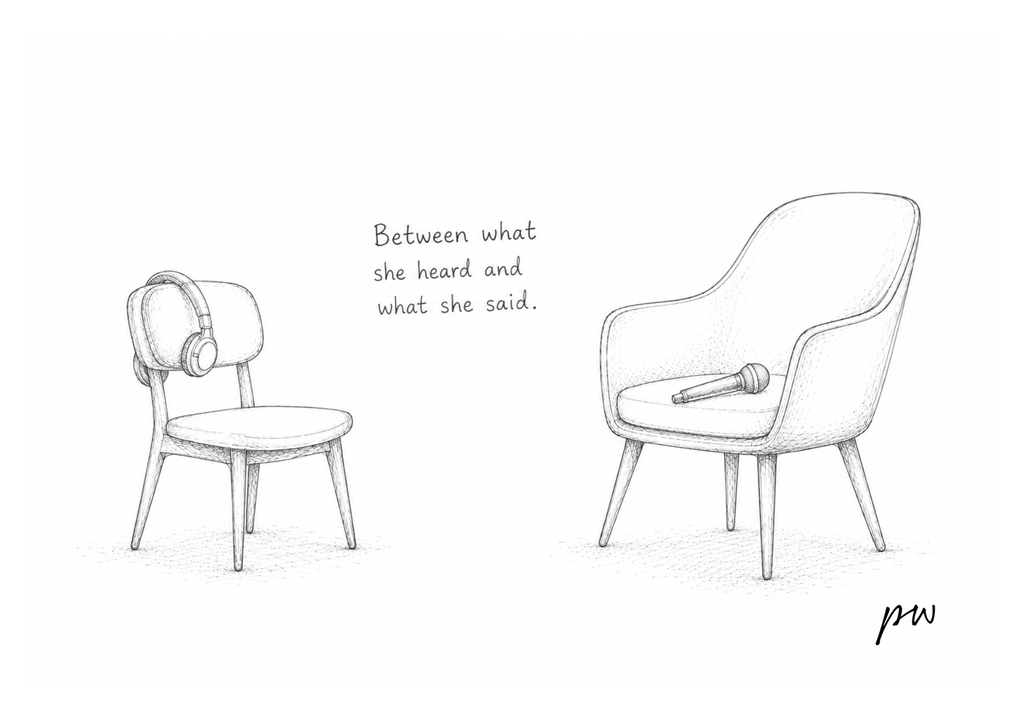
I did not arrive at adulthood having neatly unlearned everything that came before it. I still catch myself explaining decisions that were mine to make, and I still recognise the urge to make myself understood before allowing myself to be firm. I still like approval. What has changed is that I no longer mistake being approved of for being free. Taking up space, for me, is being able to question, to challenge, to say what’s on my mind, to change my mind, to set boundaries and to enter a room without first calculating how little of myself I can bring into it. I can listen without assuming that my role is simply to receive what other people have to say. I am allowed to question, challenge and speak too. I am also learning to accept that I will sometimes be misunderstood without treating every misunderstanding as something I am responsible for correcting.
“Raising a girl has made me look much more closely at what I learned about being one.”
It is one thing to question these lessons for myself. Raising a daughter means having to think about which of them I might be teaching her too. I hear myself telling my daughter to be polite, to apologise, to listen, to think about other people, and I still believe in those things. But I need her to know the other half too. I want her to respect people without assuming that respect means obedience. I want her to be kind without believing kindness requires compliance. I want her to consider other people’s feelings without making herself responsible for them. And there are circumstances in which I would much rather somebody call her rude than have her silence the voice inside herself telling her that something isn’t right.
Sometimes that means interrogating my own parenting. Am I asking her to apologise because she has done something wrong, or because somebody is unhappy with her? Am I asking her to listen because there is something she needs to hear, or because an adult expects compliance? The behaviour that irritates me in my daughter may be exactly the behaviour I would want her to have with somebody else.
There are also moments when I tell her something and realise that I needed to hear it too. If I tell her that somebody being disappointed does not necessarily mean she has done something wrong, that lesson doesn’t belong only to her. Parenting her has made me look again at some of the things I inherited, not simply to reject them, but to decide consciously which ones deserve to travel forward.
“Some of what I am teaching my daughter, I am only now learning to give myself.”
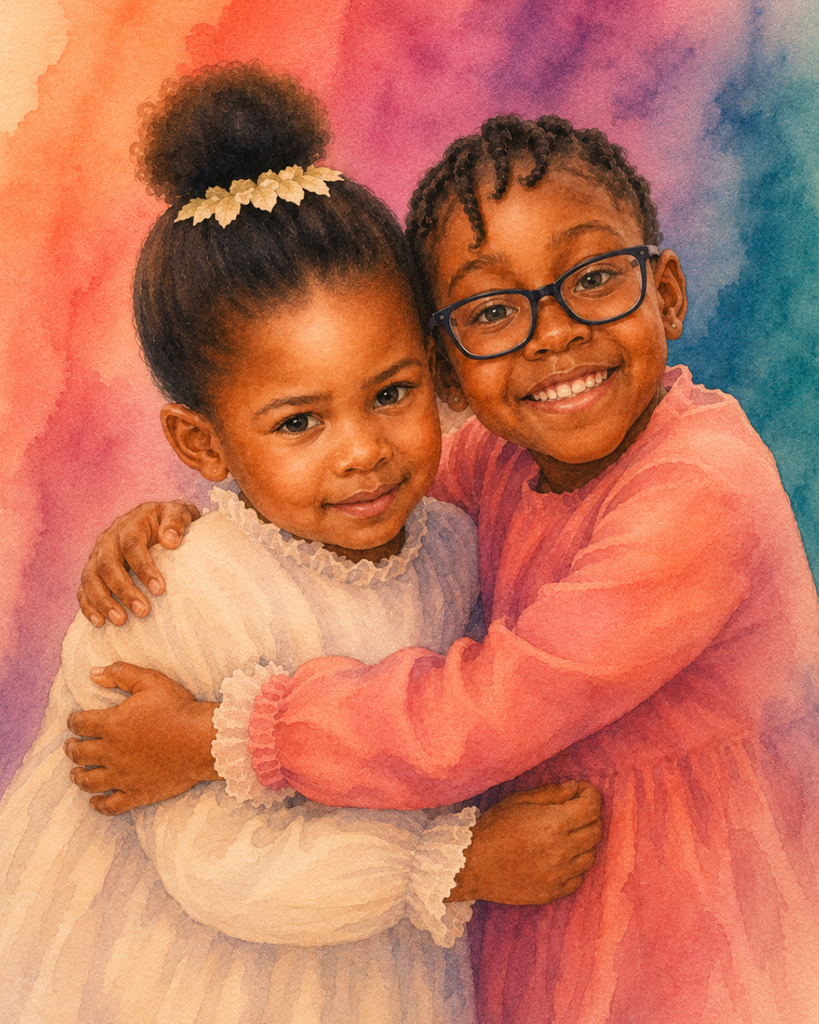
There are two girls I think about now when I think about what it means to raise one. One is thirteen, growing rapidly towards a womanhood that belongs entirely to her. I can give her what I know, answer what I can, admit when I don’t know, and leave enough room around all of it for her to arrive at answers that are her own.
The other exists mostly in memory. I cannot go back and raise her differently or give her the benefit of everything I know now. I can stop expecting her to have known things she had not yet been given the chance to learn. I can notice when she turns up in the woman I am now, question what she learned before carrying it forward, and extend to her some of the grace I give my daughter so instinctively. She too was simply a girl trying to make sense of the world with what she had been given.
I know I will pass things on imperfectly too. One day my daughter may identify lessons she received from me that she needs to put down, and I hope I will have raised her with enough autonomy to do exactly that. My job is not to make sure she becomes a better version of me. It is to give her enough room to become entirely herself, whoever that turns out to be.
I am learning to give myself some of that room too.
Filed under: Unlearning Myths
A space for questioning what we think we know. Challenging assumptions, examining stereotypes, and exploring the stories we accept as truth. From culture and identity to politics, power and everyday life, these reflections explore what happens when we look beyond the narratives we’ve been taught to believe.